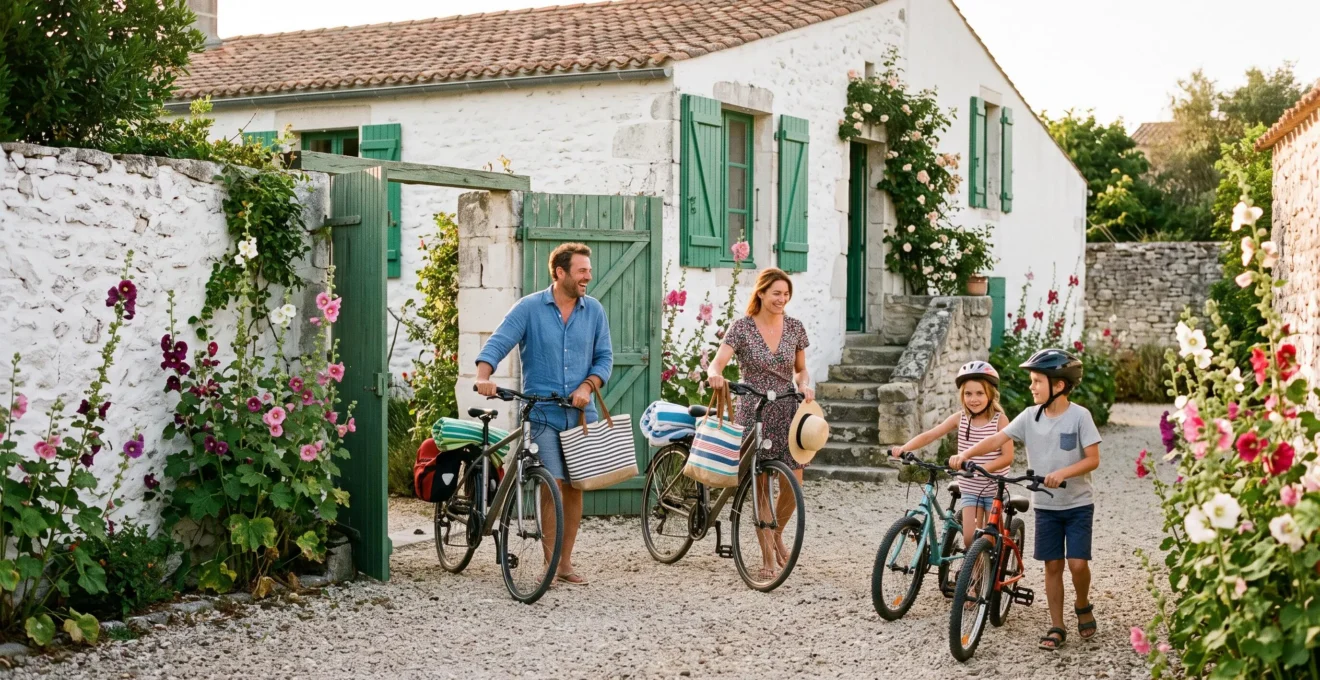
Renting a private villa on Île de Ré can be worth the higher price when you value three things: real privacy, more space, and day-to-day autonomy (meals, schedules, outdoor living) on a small island where summer crowds can make shared spaces feel busy. The trade-off is simple: you gain independence, but you usually give up hotel-style services.
This guide helps you compare a private villa rental with a hotel, a guesthouse, or a standard holiday home—using the island’s realities (villages, cycling, beaches, and peak-season demand) so you can decide with less uncertainty.
What a private villa changes on Île de Ré, in practical terms
- Privacy: no shared corridors, breakfasts, or pool areas—useful in high season.
- Space: separate rooms and outdoor areas often make the stay smoother for families and friends.
- Autonomy: cook after the market, come and go by bike, and keep your own rhythm.
- Value depends on your group: the premium is easier to justify when costs and space are shared.
- Verify before paying: listing details, total price, and local seasonal-rental formalities.
What Is a Private Villa Rental on Île de Ré?
Direct answer: On Île de Ré, a private villa rental is typically a whole property rented to one party, offering exclusive use of indoor and outdoor spaces—unlike accommodation where parts are shared with hosts or other guests.
In French tourism law, many “villa” rentals fall under the category of meublé de tourisme (furnished tourist accommodation). The French Ministry of the Economy notes that these rentals are “villas, apartments or studios” provided for the tenant’s exclusive use, for stays that do not exceed 90 consecutive days (legal framework referenced on the government page about Les meublés de tourisme (Direction générale des entreprises)).
How is a villa different from a gîte or a guesthouse on the island?
Direct answer: The clearest difference is whether you have exclusive use of the accommodation and whether the host is present on site in a “hosted” format.
Official consumer guidance from the DGCCRF (Ministry of the Economy) highlights that a chambre d’hôtes (guesthouse B&B) involves the presence of the host and is regulated with capacity limits; a “gîte” does not have a specific legal definition and generally follows seasonal furnished-rental rules. This makes “villa” mostly a market term, while the legal treatment often aligns with furnished tourist rentals depending on the setup (see the DGCCRF page on appellations for chambres d’hôtes and gîtes).
Side-by-side (simplified) to help you decide:
- Private villa rental: whole home for your group; you manage meals and schedules; outdoor space (garden/terrace/pool) may be private when provided in the listing.
- Guesthouse (chambre d’hôtes): private room(s) in the host’s home; shared elements are common; breakfast is usually part of the format; host presence is part of the experience.
- Standard holiday home / “gîte” label in listings: can resemble a villa or a simple house; what matters is whether it’s exclusive-use and what amenities are included.
What to watch for when you see “villa” in a listing: it does not guarantee a pool, premium services, or a specific classification—check what is explicitly included (private outdoor space, number of bedrooms, parking, linens, cleaning, fees).
Why Choose a Private Villa Over a Hotel or Standard Rental?
Direct answer: A private villa is most compelling on Île de Ré when you want more room to live (inside and outside), less shared contact in peak summer, and the freedom to run your days around beaches, markets, and cycling—without hotel timetables.
What does a private villa offer that a hotel doesn’t?
First, space and privacy tend to be the practical differentiators. Even a very good hotel stay usually concentrates you into one room (or two), while a villa setup can spread daily life across bedrooms, a living area, and an outdoor corner for lunches or kids’ downtime.
Second, you control the rhythm: breakfast on your terrace, late returns after an evening walk in a village, and the ability to store beach gear and market groceries without navigating shared areas.

Is the higher price easier to justify for families and groups?
Direct answer: Often, yes—because a villa’s value is usually tied to shared spaces (living room, terrace, garden) and the ability to split costs across several people, while hotels price per room and can add extra daily expenses.
Consider a hypothetical family of four in summer: you may need two hotel rooms to get comparable sleeping comfort and evening quiet. In a villa, the “extra” you pay can translate into everyday ease: one place to eat, play, nap, and store bikes—without coordinating across rooms.
For a couple, the equation can flip: a hotel may feel simpler if you prioritise reception support, daily cleaning, and on-site breakfast over having a kitchen and private outdoor space. The “worth it” question becomes less about luxury and more about how you want your days to run on the island.
Villa vs hotel vs standard rental: a practical comparison
| Criteria | Private villa rental | Hotel / guesthouse |
|---|---|---|
| Privacy | Exclusive-use property for your party (when booked as an entire home) | Shared building and common areas; guesthouse includes host presence |
| Space | Often multiple rooms plus outdoor living (depending on the listing) | More compact private areas; shared lounges or gardens vary |
| Autonomy | Kitchen, storage, flexible schedules | More services and structure; less self-catering |
| Best fit | Families, groups, couples seeking quiet and independence | Short stays, service-focused travellers, couples who prefer simplicity |
| Main trade-off | You manage meals and daily logistics | Less private control; shared spaces in high season |
One fair limit to keep in mind: a villa is not automatically “better”—it is simply a different model. If you know you won’t cook, won’t use outdoor space, or prefer daily service, a hotel can be the more coherent choice.
The Local Benefits of Staying in a Villa on Île de Ré
Direct answer: The most “Île de Ré-specific” benefits of a villa are the ability to live like a local in a village setting—cycling out for markets and beaches, returning for quiet breaks, and spending evenings in your own outdoor space rather than in crowded common areas.
How does a villa change your day-to-day experience on the island?
Because the island is made of villages and beach access points rather than one dense resort core, having a base that feels like a home can make logistics smoother. You can plan around the day’s wind, beach choice, or market stops, then return to a familiar place to regroup—especially with children.
A typical (hypothetical) villa day looks like this: morning run to a local market for bread and fruit, bike out for a beach window, then back for a late lunch on the terrace and a rest before heading out again in the early evening.
Why outdoor space matters more in summer on Île de Ré
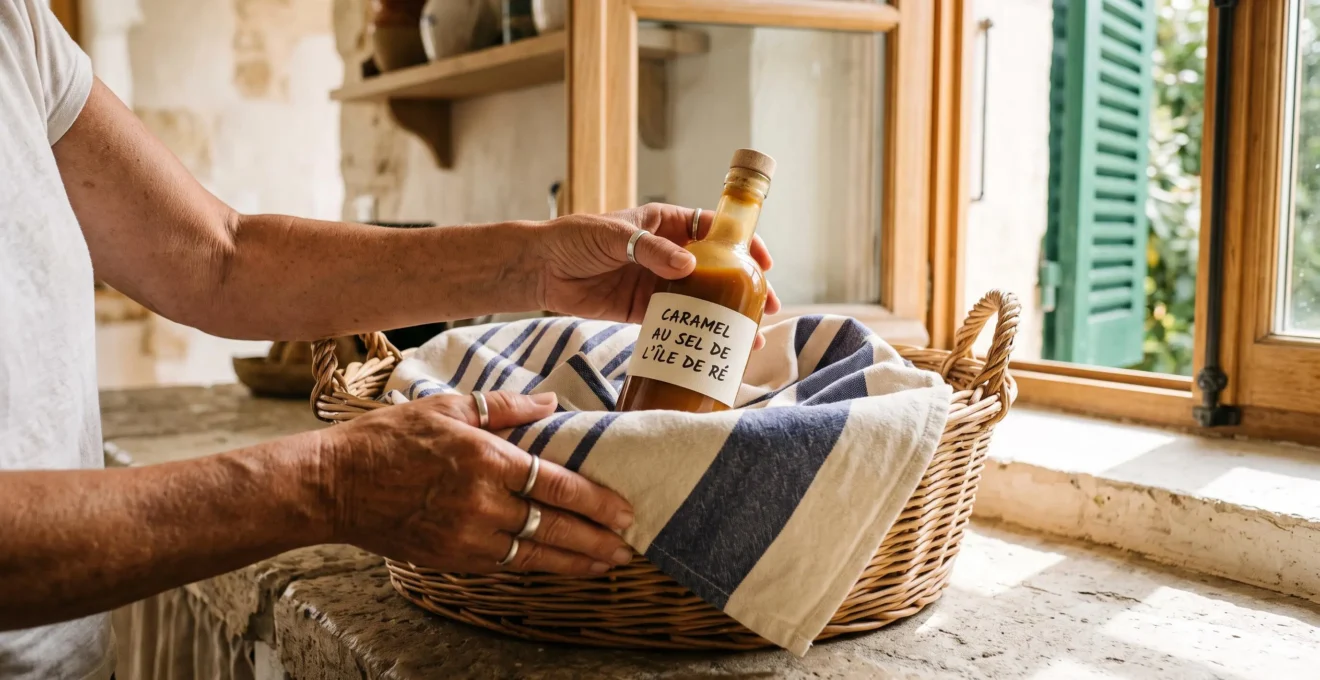
On an island summer trip, outdoor living is not a nice extra—it often becomes the “second living room.” A garden, enclosed courtyard, or terrace can be the difference between feeling you are always out in public and having somewhere calm to read, eat, or let kids play between outings.
That benefit is especially tangible on Île de Ré because many travellers spend their days moving between villages, beaches, and cycling routes. When your accommodation has a usable outdoor area, you don’t have to choose between “stay in” and “go out”: you can do both in the same day.
Reality check for listings: “Outdoor space” can mean very different things—from a small courtyard to a large garden. Check measurements, privacy (overlooked or enclosed), and whether a pool is explicitly private to your booking.
How to Book a Private Villa on Île de Ré
Direct answer: To book safely, start early for summer, use reputable channels, and verify three things before paying: the legal/administrative status (when applicable), the exact amenities and fees, and the cancellation and payment terms.
Where should you search, and what should you verify first?
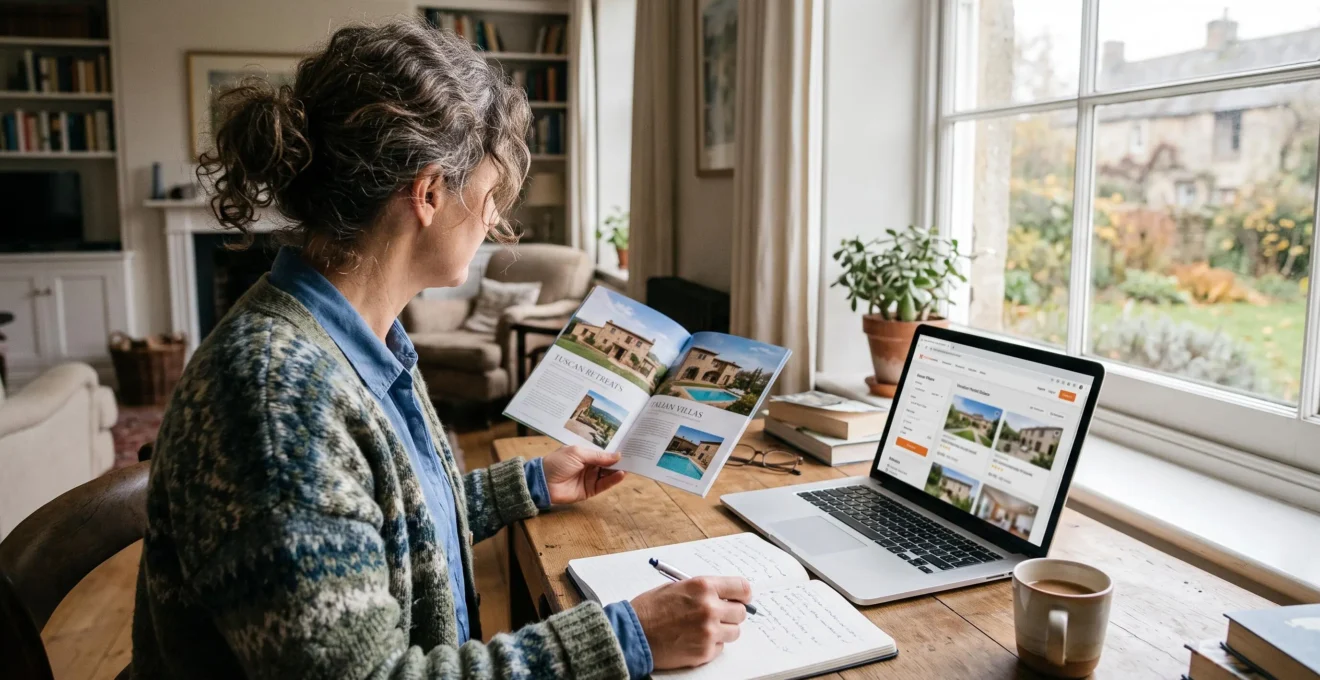
Start with a clear non-negotiable list (beds, outdoor space, parking, distance to your preferred village or beach access) and a “nice-to-have” list (pool, air conditioning, weekly cleaning). That prevents paying a villa premium for features you will not actually use.
Also look for transparency: recent photos, a detailed inventory of amenities, and a breakdown of what is included versus paid extra. If you cannot find clear answers, ask before committing—especially for Wi‑Fi, linens, end-of-stay cleaning, and deposits.
What local rules should you be aware of on Île de Ré?
On Île de Ré, furnished tourist rentals can come with local formalities. The Communauté de Communes de l’Île de Ré explains that owners of meublés de tourisme must make a declaration in mairie via the Île de Ré tourist tax platform (using the relevant CERFA form), with changes around a registration number mentioned on the same official portal.
As a traveller, you are not responsible for filing the owner’s declaration, but these rules matter because they are a practical credibility signal: a professional, compliant listing is more likely to provide clear contracts, documented pricing, and properly handled tourist tax when it applies.
A step-by-step way to vet a villa listing before paying
- Confirm “entire place” and privacy
Make sure the property is rented as a whole home for your party, and check whether any spaces are shared (driveway, garden access, pool).
- Cross-check sleeping and living spaces
Match bedrooms, beds, and bathrooms to your group’s needs; look for a floor plan or room-by-room photo set when available.
- List what is included vs extra
Ask specifically about linens, towels, end-of-stay cleaning, pool heating (if relevant), deposits, and any on-site fees.
- Read cancellation and payment terms in full
Before you pay, understand deadlines, refund conditions, and what happens if dates change.
- Get the total price in writing
Request a final total that includes mandatory charges and indicates how tourist tax is handled if applicable.
If you want to understand how seasonal furnished rentals can be taxed and handled in practice, this background page on seasonal rental taxation can help you interpret what a listing may include in its pricing breakdown.
Direct answer to “How do you book without unpleasant surprises?” Choose clarity over charm: a slightly less “perfect” villa with transparent terms and complete documentation is usually the safer decision than a stunning property with vague fees and unclear conditions.
Frequently Asked Questions About Renting a Villa on Île de Ré
Direct answer: Most booking hesitations come down to three points: what truly justifies the cost, how early to book for summer, and whether the villa format matches your travel style (family, couple, or group).
Is renting a private villa on Île de Ré worth the price?
It can be worth it when the villa’s premium translates into benefits you will use daily on the island: real privacy in peak season, enough space to avoid feeling confined, and autonomy (kitchen, storage, outdoor living). It is harder to justify if you prefer hotel services, do not plan to spend time “at home,” or are travelling as a couple who would be happy with a well-located hotel room.
How much space and privacy does a villa offer compared to a hotel room?
A villa usually means multiple rooms and private outdoor areas for your party—whereas hotels concentrate privacy into the room itself, with shared corridors and common spaces. What matters is what the listing states: verify the number of bedrooms/bathrooms, whether outdoor areas are enclosed and exclusive-use, and whether any facilities are shared with another unit.
What should you verify before booking a villa rental on Île de Ré?
Verify (1) the “entire property” setup and what is truly private, (2) the full list of included amenities and paid extras (linens, cleaning, deposits, tourist tax handling), and (3) the payment and cancellation terms. If anything is unclear, ask for written confirmation before you pay.
Is a private villa a good choice for families or for couples?
For families, villas often make the stay smoother thanks to separate sleeping areas, outdoor space, and a kitchen for flexible meals—useful on an island day built around beaches and cycling. For couples, a villa is most appealing if you prioritise quiet, private outdoor breakfasts, and independence; if you want on-site services and simplicity, a hotel or guesthouse can feel more convenient.
How early should you book for a summer stay on Île de Ré?
For summer, booking earlier generally gives you more choice—especially for villas that meet specific needs (pool, enclosed garden, multiple bathrooms, parking). Because timing varies by year and village, treat “early” as a strategy: shortlist options, compare terms, and secure the best match once you have verified total costs and conditions.
If you are still hesitating, the most objective approach is to run your options through a simple grid: privacy, space, autonomy, and cost per group. On Île de Ré, a private villa tends to win when your holiday is built around outdoor living and shared time—while hotels and guesthouses often win when you want services and low-effort logistics.
Whichever option you choose, prioritise listings with clear terms, complete pricing, and detailed amenities. That is the most reliable way to feel that a higher accommodation budget on Île de Ré is paying for comfort you will actually enjoy.